
2026: The Year I Tried to Do Less and Somehow Did More

Hello everyone!
Apparently, I haven't written a blog for almost a year. Which is quite impressive considering I started this website largely because I wanted somewhere to write about all the ridiculous things I get up to.
I could tell you it's because I've had nothing interesting to write about, but unfortunately my social media history has provided some rather damning evidence to the contrary.
In fact, looking back over the last ten months, I'm beginning to wonder if I've developed some sort of inability to sit down and relax. I've been looking after bees, making honey, inventing things, giving things away, filming myself doing things, watching those recordings back and wondering why on earth I said that, raising children, rebuilding the website and occasionally remembering that I also have a full-time job.
And that's without the usual assortment of abandoned hobbies and half-finished projects cluttering up the garage. I'm sure there's probably something in there I've forgotten I even own, although finding it would require moving several hundred other things that I'm absolutely going to need one day. The potential avalanche risk is also offputting too...
So, with the new Myst~Tree website finally up and running, I thought it would be a good time to dust off the blog and have a look back at what's actually happened this year. I originally intended this to be a fairly short update, but after starting to write down everything that's happened, it became increasingly obvious that wasn't going to happen.
Grab a brew. There's quite a lot to get through.

January: A Rather Eventful Start
I should probably start by introducing the newest member of the Myst~Tree household.
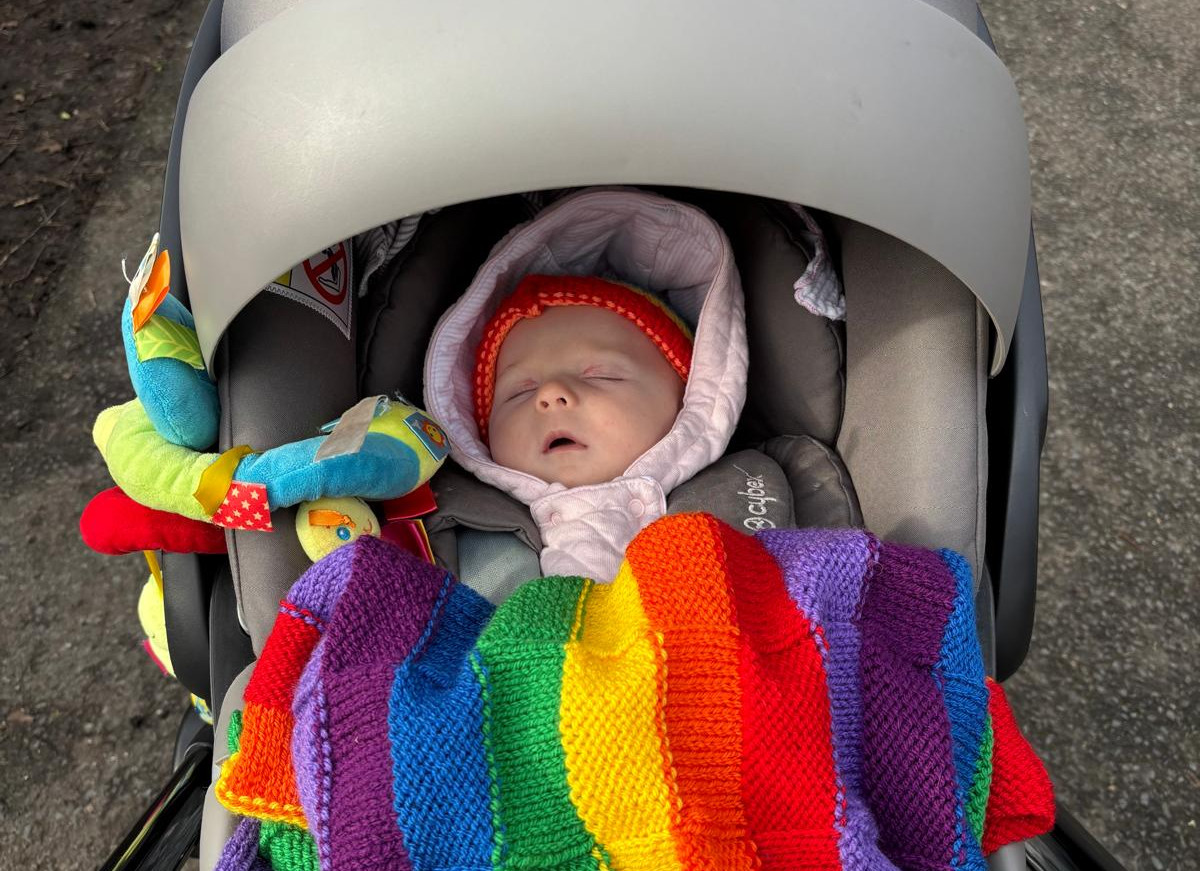
Our second daughter, Willow, arrived on the 7th of January, which made for a rather interesting Christmas. You see, when your wife is heavily pregnant and due to give birth at any moment, you develop this strange ability to wake up at the slightest noise. Every groan, grumble, sigh or movement from Kat had me immediately springing into action, convinced that this was it. The baby was coming.
Now, I'm not particularly good at functioning when I've just woken up at the best of times. Add a healthy dose of impending-fatherhood paranoia and apparently I become completely incapable of rational thought. I spent a considerable amount of Christmas lying in bed listening to my wife breathe, waiting for the slightest indication that I needed to leap into action and start doing whatever it is husbands are supposed to do when their wives go into labour.
On one particularly memorable night, I woke up absolutely convinced Kat was giving birth. Not that she'd told me this, you understand. In fact, she seemed entirely unaware of the situation, which I thought was rather concerning given the seriousness of what was apparently happening.
Naturally, I decided the sensible thing to do was wake her up and inform her that she was, in fact, in labour.
What followed was a rather one-sided conversation in which I repeatedly tried to explain the seriousness of the situation whilst defending myself against a barrage of sleepy, half-hearted "knock it off" slaps. Apparently Kat wasn't particularly interested in my medical diagnosis and would have preferred that I "sod off!"... charming...
Fortunately, it turned out she wasn't giving birth. I was simply a confused idiot.
In my defence, she gave birth four days later, so I was only slightly premature in my diagnosis.
Anyway, Willow arrived safe and sound, and suddenly we were a family of four. With Esme already keeping us sufficiently busy, having another tiny human demanding attention rather changed the household priorities. Sleep became a distant memory, free time became something that happened to other people, and the business was placed firmly on the back burner for a little while.
I've always said that Myst~Tree is something I want to build around my family, not something that takes me away from them. It's quite easy to say things like that when you're planning the future, but considerably harder to put into practice when you've got a business that constantly needs attention and a brain that keeps coming up with things it would quite like to try.
As the year progressed, that became a much more important consideration than I initially realised. Although, judging by what happened next, having less free time apparently didn't stop me finding new and exciting ways to occupy what little remained.
The Honeyade Experiment (Or Why My Garage Is Full of Bottles)
Earlier in the year, I decided to have another go at something I'd been thinking about for a while: Honeyade.
The idea was fairly simple. A refreshing soft drink made using honey rather than refined sugar, with a few different flavour combinations to see what worked. I've always enjoyed experimenting with food and drink, and since I happen to have a reasonable supply of honey available, it seemed like something worth trying.
I experimented with elderflower and lemon, blueberry and lime, and pineapple and ginger. The latter seemed to be a particular favourite when I took samples around for people to try.

And, to be fair, the feedback was actually rather good! People enjoyed them, the flavours worked well, and for a while I thought I might be onto another product to add to the Myst~Tree range. There's something quite satisfying about creating a recipe from scratch and watching somebody try it for the first time, particularly when their reaction isn't immediately to spit it into the nearest plant pot.
Unfortunately, there is a rather large difference between making something people enjoy drinking and making something commercially viable.
The drinks were quite labour-intensive to produce, their shelf life wasn't particularly generous, and I couldn't get enough businesses to commit to stocking them to justify investing the time and money needed to develop them properly. It's one thing making a few bottles for people to sample, but producing enough to sell consistently, storing them, delivering them and making sure they remained suitable for sale was going to require a lot more work than I'd initially hoped.
And when I sat down and properly considered the amount of time I'd be putting in against what I'd realistically earn from them, the numbers just didn't add up.
The drinks themselves weren't the problem. The economics were.
It's something I've had to learn repeatedly whilst running a small business. Just because I can make something doesn't necessarily mean I should make something. Unfortunately, this doesn't seem to stop me trying, although I'm slowly getting better at recognising when an idea needs to remain just that.
So Honeyade has officially been shelved. Not shelved in the exciting supermarket sense, where it's sitting proudly between the Fanta and the overpriced coconut water, but shelved in the slightly depressing "I'll come back to that one day" sense.
Perhaps when Myst~Tree becomes my full-time occupation I'll revisit it. I'd certainly like to, because I still think there's something there, and the feedback was too good to dismiss the idea entirely. For now, though, there are other things that deserve my limited time a little more.
The physical evidence of this particular abandoned adventure is still sitting in my garage in the form of a collection of semi-clean wine bottles that I really should scrub properly and put away. Unfortunately, I've not had time, so they'll continue living alongside the various buckets of forgotten meads and ciders, quietly reminding me of all the projects I was absolutely convinced were going to be brilliant.
At this point I'm not entirely sure whether I have a garage or a museum dedicated to unfinished hobbies.
Rewilding Rainford: The Good, the Bad and the Rather Disappointing
One of the things I'm most proud of this year has been the continued growth of Rewilding Rainford. For anyone unfamiliar with it, this is my attempt to encourage people, particularly children, to take a greater interest in the wildlife around them and hopefully do something positive to help it.
I've always been fascinated by nature, and I've become increasingly concerned that children are growing up surrounded by wildlife without necessarily understanding what they're looking at. I want children to be excited about seeing a butterfly, finding a beetle under a log or watching a bird build a nest. I want them to understand that nature isn't just something you see on a David Attenborough documentary. It's happening all around us, often in the most ordinary places.

So this year I decided to give away wildflower seeds to schools, nurseries, youth groups and community organisations across Merseyside and some surrounding areas.
What started as a relatively modest idea quickly became something considerably bigger. By the time I'd finished, I'd sent out over 120 packs of wildflower seeds. Each contained around 30 g of seed, enough to cover approximately five square metres, giving us the potential for over 600 square metres of additional wildflower habitat if everything was planted successfully.
Not bad for something that started with me sitting at my computer wondering whether anybody might fancy some free seeds.

Of course, there was a cost involved. All told, I spent somewhere around £700 of my own money on the project, between the seeds, packaging and postage. I don't begrudge spending money on something like this. The purpose of Rewilding Rainford has never been to make money, and I've always been happy to put something back into the local environment and the community that supports me when I can.
What I found rather disappointing was what happened afterwards.
Out of all those groups, only around ten actually got back in touch to let me know what they'd done with the seeds. To those who did, thank you. Genuinely. Seeing pictures of children getting involved, hearing about the areas being planted and knowing the seeds had been put to good use made the whole thing worthwhile.
But I also discovered that some schools and groups whose names had apparently been used to request free seeds hadn't actually received them.
That was rather upsetting. I don't know what happened in every case, and I don't want to assume the worst about everybody involved, but the thought that something intended for children and wildlife might not have reached its intended destination was difficult to swallow. Particularly when the whole point of the exercise was to get more children involved with nature rather than simply distribute packets of seeds.
It's also frustrating because I genuinely wanted to see what happened to the seeds. I wasn't expecting lengthy reports or beautifully presented photographs from everybody. Even a quick message saying "We've planted them, thanks!" would have been lovely. I wanted to know whether the project had worked and, importantly, whether it was worth doing again.
The whole experience has made me rethink how I'll approach things next year. Rather than relying on people to distribute resources on behalf of schools and groups, I'm going to try contacting those organisations directly. Hopefully that will mean everything reaches the children it's intended for, and it'll make it easier for me to stay in touch and see what happens.
I also want to branch out a little.
Next year I'm hoping to give away bird boxes to schools and youth groups, with one small request: I'd love them to keep an eye on their boxes and let me know if anybody moves in.
Imagine a group of children putting up a bird box, watching it throughout the year and then discovering that a pair of blue tits has decided to raise a family inside. They could watch the parents coming and going, learn about nesting behaviour and perhaps even see the young birds leaving the box.
For some children, that might be the first time they've properly observed wild animals going about their lives. And who knows? Perhaps one of them will become a future ecologist, conservationist or simply someone who thinks twice before cutting down a tree or clearing away a patch of wildflowers.
That, to me, would make the whole thing worthwhile.
The seed project also somehow managed to get me into three separate newspapers, which was rather exciting. Although one of them seemed considerably more interested in the fact that the business was inspired by the death of my cat, Myst, than the actual rewilding work I was trying to promote.


Now, Myst is obviously an important part of my life and the reason this little business has its rather unusual name. But I did find it slightly amusing that I'd spent months organising a wildlife project, only for the most interesting part of the story apparently to be a cat that died years ago.
I appreciate that a story about a dead cat is probably more emotionally compelling than a middle-aged bloke putting seeds in envelopes, but still!
Never mind. Publicity is publicity, and if it encouraged even a few more people to take an interest in wildlife, I'll consider it worthwhile.
Spring Arrived, and the Bees Immediately Ruined My Plans
After a relatively quiet winter, spring arrived with a rather sudden change in the weather, and the bees responded as bees tend to do.
By completely ignoring my carefully laid plans.
The colonies seemed to go from sitting quietly in their boxes to expanding at an alarming rate almost overnight. Oilseed rape was coming into flower, forage was appearing and suddenly I was back to inspecting colonies, adding equipment, trying to prevent swarms and wondering why I hadn't prepared everything several weeks earlier.

It's a strange feature of beekeeping that you can spend the entire winter looking forward to spring, only to become immediately overwhelmed when it finally arrives. All those jobs you've been putting off suddenly become rather urgent, and the bees certainly aren't going to wait until you've finished sorting everything out.
I was also doing some queen rearing, making splits and producing nucs, which inevitably led to the usual assortment of successes, failures and moments where I stood staring into a hive wondering what on earth the bees thought they were doing.

One of my attempts at checkerboarding to prevent swarming went spectacularly wrong, resulting in yet another split being made. I had queen cells fail, colonies become aggressive, and at one point managed to get myself thoroughly battered by a particularly unpleasant group of bees who seemed to take exception to my very existence.
I also experimented with some new queen genetics, including Aberdeen native-type queens and F1 Buckfasts, hoping to improve the temperament and performance of some colonies. Some of my existing bees were perfectly pleasant to work with, whilst others appeared to be following a rather different interpretation of our relationship.

As usual, the bees had their own opinions on the matter.
But overall, it was an interesting season, and one in which I found myself thinking quite differently about beekeeping. Not so much about how to produce more colonies or expand the business, but whether I actually wanted to keep doing things the way I had been.
Which brings me to something I think I might finally have under control.
I Think I've Finally Cured My Bee Fever
Anyone who's kept bees for more than about five minutes will probably be familiar with bee fever. You start with a couple of colonies, then decide perhaps another one wouldn't hurt. You make a split, catch a swarm, buy another queen, acquire some equipment from somebody who's giving up beekeeping, and before you know it you're standing in a field surrounded by forty colonies wondering how this happened.
I had it badly.

At one point I was managing around 70–75 colonies, and I was absolutely convinced that expanding further was the sensible thing to do. More hives meant more honey, more opportunities and a bigger business. It all seemed perfectly logical at the time, especially when every successful split or swarm was another colony I could add to the collection.
The problem was that every colony also meant more inspections, more equipment, more feeding, more treatment, more queen problems and more things that could go wrong. There comes a point where you stop enjoying the individual colonies quite as much because you're spending so much time worrying about everything else that needs doing.

Last year I had an outbreak of Chronic Bee Paralysis Virus (CBPV), which was a particularly unpleasant experience and one that made me reassess quite a few things. Watching colonies struggle is never enjoyable, especially when you've invested so much time into raising them. It also forced me to consider whether I'd been so focused on expanding that I'd overlooked just how much work I'd created for myself.
I'm not suggesting that having a large number of colonies caused the disease. But dealing with problems like that becomes considerably harder when you're already struggling to find enough hours in the day, and it certainly made me think seriously about whether I was spreading myself too thinly.
This year, with two young children at home, I really had to decide what was important to me. And, rather unsurprisingly, the children won.
So I made a conscious decision to stop chasing colony numbers and instead concentrate on keeping a smaller number of strong, healthy and productive colonies. I started the season with sixteen and aimed to keep things manageable rather than expand endlessly.
The bees, naturally, disagreed. They produced queen cells, attempted to swarm, demanded splits and generally behaved as though I'd announced an exciting new expansion programme. I spent a fair amount of spring trying to persuade them that I really didn't need any more colonies, although I suspect they weren't particularly interested in hearing my reasoning.
But I think I've done a pretty good job resisting the temptation. I'm now managing around twenty colonies, and although that still keeps me busy, it's a considerably more sensible number than I've had in previous years.
The biggest difference isn't necessarily the number itself. It's that I no longer feel the need to keep every colony I could possibly produce simply because it's there. Sometimes making the decision not to expand is every bit as important as knowing how to make another split.
More importantly, I've started to realise that having more hives doesn't automatically make you a better beekeeper, and it certainly doesn't guarantee more honey.

A smaller number of strong, well-managed colonies can achieve an enormous amount. And this year's honey harvest rather reinforced that point.
The Honey Harvest That Went Suspiciously Well
I don't want to tempt fate here, but this year's honey extraction went almost terrifyingly smoothly.
Anyone who's followed Myst~Tree for a while will know that my attempts at doing anything involving large quantities of honey usually result in something going wrong. Equipment breaks, honey gets everywhere, I discover something I've forgotten to order or I end up spending three hours cleaning something that should have taken five minutes.
This year, though, things just seemed to work.
I managed to get everything extracted in record time, with considerably less stress than I've become accustomed to. Equipment behaved itself, the process went relatively smoothly and I didn't finish the whole thing questioning every decision I'd ever made.
Naturally, this made me deeply suspicious.
But the really interesting part was the amount of honey I'd produced. Despite running roughly half the number of production colonies I had the previous year, I ended up with a similar amount of honey.
Half the production colonies. Similar honey production. Make that make sense...
Now, obviously there are a lot of variables involved in honey production. Weather, forage, queen quality and timing all play enormous roles, so I wouldn't suggest that simply halving your colonies automatically doubles their productivity. That would be a rather convenient discovery, and I suspect commercial beekeepers would have worked it out long before me.
But it certainly reinforced something I've been increasingly convinced of: a few strong, properly managed colonies can be much more productive than a large number of colonies you're constantly struggling to keep on top of.
When you're managing fewer colonies, you've got more time to pay attention to each one. You can make sure they've got enough room, spot problems earlier and concentrate on keeping them strong rather than constantly rushing from one job to the next.
There's also a lot to be said for simply having fewer boxes to lift, move, inspect and worry about.
And the additional time I gained by not managing so many hives was time I could spend with my family, on the business or occasionally doing something completely unrelated to bees. Although, judging by the rest of this blog, I haven't been particularly good at that last one.
Once extraction was finished, it was back to jarring, labelling, supplying stockists and getting the new season's Rainford honey ready for everyone. It's always satisfying seeing the finished jars lined up after months of looking after the colonies, even if I do become thoroughly fed up with washing equipment and cleaning honey off every available surface.
I also finally got around to cutting some comb honey. I'd actually produced this by accident... I didnt realise one of my supers was filled with cut comb foundation... It was a happy accident and I ended up with 36 lovely packets. So I can't complain too much!
Cut comb is one of those products that's sticky, messy, fiddly and an absolute nuisance to prepare. It's just unfortunate that it's also ridiculously delicious, so I suppose I'll have to keep making it.
Apparently I'm a YouTuber Now
Another thing that happened this year was me deciding to take YouTube a little more seriously.
I've been making videos for quite a while, but I wanted to improve the quality and hopefully make something a little more useful and enjoyable for people to watch. I've always enjoyed teaching people about bees and wildlife, and video seemed like a good way of sharing what actually happens in the apiary rather than simply explaining it afterwards.
So, naturally, I bought a proper camera, invested in video-editing software and proceeded to spend several hours every evening watching recordings of myself.

If you've never had the pleasure of editing your own videos, I can assure you it's a deeply humbling experience. You very quickly discover all the little habits you didn't realise you had, and after listening to yourself say the same sentence twenty times whilst trying to make a clean edit, you begin to question whether you were ever capable of speaking properly in the first place.
Apparently I say "erm" approximately every four seconds, regularly forget what I'm talking about halfway through a sentence and have an extraordinary ability to explain something perfectly well right up until the moment the camera starts recording.
I also discovered that I have a worrying tendency to fall through the floor of my queen-rearing apiary...
Not once, either...

Apparently the ground and I have some sort of ongoing disagreement, and judging by the footage i've had to edit out of my videos, it appears to be winning.
Fortunately, the bees were providing plenty of material. Between spring inspections, queen rearing, swarm prevention that didn't always prevent swarms and splits that didn't always go to plan, there was certainly no shortage of things to film. In fact, I was beginning to suspect that the less competent I appeared, the more entertaining the videos became. A rather worrying discovery for someone attempting to produce educational content...
For a while I was producing full weekly inspection videos, often over an hour long, alongside shorter versions and educational clips. I enjoyed making them, and I liked the idea of showing what a genuine inspection looks like rather than just the interesting five minutes that people normally see online.
The problem was that filming the bees took a couple of hours, but editing the footage could take several more.
By the time I'd finished work, looked after the children, dealt with any niggling bee jobs, sorted the business and finally sat down at the computer, there wasn't much of the evening left. I found myself spending hours every night editing videos that sometimes only reached a hundred people.
Now, I don't make them purely for views. I genuinely enjoy sharing what I've learned and showing people what actually goes on inside a hive. But there's a balance to be struck between enjoying something and allowing it to consume every spare moment, particularly when those spare moments are becoming increasingly rare.
There was also the slightly uncomfortable realisation that I'd been deliberately reducing my hive numbers to spend more time with the family, only to immediately replace those hours with video editing.
An absolutely flawless plan, Greg. Well done.
So I've started moving away from the enormous weekly inspection videos and concentrating more on shorter educational content, interesting discoveries and the occasional spectacular beekeeping failure. I still want to make longer videos when there's something worth covering, but I don't think every single inspection needs to become a feature-length documentary.
I've also been talking about some broader subjects, including why certain people seem to attract more defensive bees, the realities of turning beekeeping into a business, the problems with measuring success by hive numbers and the Dunning–Kruger effect.
That last one has actually led to me being asked to write an article for BeeCraft magazine, which is rather exciting. It's not published yet, but hopefully it'll appear at some point.
I have to admit, the idea that somebody wants to print several hundred words of my ramblings in a proper beekeeping magazine is slightly concerning. Clearly they haven't watched enough of my videos.
2,500 Followers? Where Did You All Come From?
Something else rather bizarre happened this year.
Back in April, I noticed that Myst~Tree had passed 2,000 followers on Facebook. I was genuinely astonished. When I first started posting about beekeeping, I never really expected anybody outside a handful of friends, family and the occasional unfortunate customer to be particularly interested.
And somehow, in the six months since April, that number has grown to over 2,500.
I've absolutely no idea how that happened.

Perhaps people enjoy learning about bees. Perhaps they like watching things go wrong. Or perhaps there's a sizeable audience of people who simply enjoy watching a slightly bewildered beekeeper get repeatedly humbled by insects.
Whatever the reason, thank you.
I've had some lovely conversations with people this year, answered countless questions and met some genuinely wonderful people through social media. It's particularly nice when somebody tells me that a video helped them understand something they were struggling with, or that they tried something I'd demonstrated and found it useful. Obviously there are some messages received that have not been so complimentary, and some have been quite threatening, but that is why the block button was invented...
On the whole, the experience has been overwhelmingly positive, and I'm genuinely grateful that so many people take the time to watch, comment and support what I'm doing.
I still find it slightly strange that people I've never met are interested in hearing what I have to say about bees, wildlife and occasionally whatever peculiar thought has wandered into my head that morning. But I'm very glad that you are, and I hope you're getting something useful out of it.
Even if that something is simply the reassurance that you're not the only beekeeper who has absolutely no idea what's going on sometimes.
A New Website, a Patient Designer and a Cat Called Myst
And finally, we come to the reason I'm writing this blog in the first place.
The new website!
I actually started looking into rebuilding Myst~Tree back in February. The old website had served me well, but the business had changed considerably since I first put it together, and it was becoming increasingly obvious that it needed a proper overhaul.
I wanted something that could bring the shop, blog, products, community projects and all the other nonsense I get up to into one place. But I also wanted it to feel like Myst~Tree rather than just another perfectly respectable small-business website that happened to sell jars of honey.
I'm not a particularly serious person (have you noticed?), and although I obviously want Myst~Tree to be successful, I never want it to become one of those businesses where every decision is made by a spreadsheet and anything remotely fun is immediately dismissed for not being profitable enough.
Don't get me wrong, I understand that a business has to make money. I've learned that lesson often enough, usually shortly after coming up with another brilliant idea that's going to cost me a small fortune. But if I'm going to spend so much of my life building something, I want to enjoy doing it. And I'd quite like the people visiting the website to enjoy themselves too.
I want people to smile occasionally, perhaps even laugh, and feel like there's an actual human being behind the business rather than a faceless company trying to squeeze every available penny out of them.
And, most importantly, I want the business to reflect the things that matter to me.
Enter Alice.

Alice actually got in touch with me through Reddit.
Yes, I have Reddit. I know. I'm sorry.
We got talking about the website, and almost immediately I had a good feeling about working with her. Partly because she clearly knew what she was doing, but mainly because she didn't immediately run away when I started explaining some of my ideas.
In fact, she joined in.
Rather than just building a website around a standard template and calling it a day, she started suggesting things, making changes and helping me work out how to turn the collection of increasingly bizarre ideas in my head into something that actually worked.
I think that's probably what made the whole experience so enjoyable. It never really felt like I was simply paying somebody to build a website. It felt more like we were working together to create something that reflected the personality of the business, with Alice providing the technical ability and artistic talent whilst I occasionally appeared with another completely unreasonable request.
One of my favourite parts of the new website is the little drawings of Myst scattered around the pages.
For anyone who doesn't know, Myst was my cat, and the business is named in her memory. She was a very special little creature, and I wanted to find a way of bringing some of her personality into the website without making everything feel overly serious or sentimental.
Alice initially created some absolutely beautiful, detailed illustrations of her. They were genuinely fantastic, and I was really impressed with what she'd done.

But after looking at them, I realised that I actually preferred the little doodles we'd been playing around with. They were less formal, slightly daft and had much more personality.

Which, if I'm being realistic, probably describes the business fairly well.

So now Myst appears all over the website in various little drawings, quietly keeping an eye on things and occasionally getting herself into trouble. It's a small detail, but it makes me smile every time I see one, and it's probably one of the things I'm happiest about with the finished design.
Alice has had to endure months of strange emails, unexpected phone calls, changes of direction and me announcing that I've had another brilliant idea at what was probably a deeply inconvenient moment. And throughout all of it she's been patient, enthusiastic and incredibly helpful.
I'm genuinely delighted with what she's created.
In fact, I've already got her working on the labels for another little project. I won't say too much about that one yet, other than it's something quite close to my heart and may or may not involve apples.
No, it's not cider. I've absolutely not got time to start that again.
Probably...
Anyway, the new website finally went live last Monday, and I'm really pleased with how it's turned out. After months of discussing layouts, artwork, products and all the other bits that go into building a website, it's lovely to finally see everything in one place and actually working.
There are bound to be little things we've missed, links that don't work or bits that need adjusting, so if you spot anything odd, please do let me know. Alice and I have both spent so long looking at the website that I suspect we're now incapable of noticing certain things, particularly if they're sitting directly in front of us.
And if you're a local business looking for help with a website, I genuinely couldn't recommend Alice enough. She's done a fantastic job, and I've already decided that she's stuck with me for the foreseeable future.
Although perhaps don't subject her to quite as many ridiculous ideas as I have.
The poor woman deserves a rest.
So, What Happens Next?
Looking back over everything, I think the biggest change this year has been how I view Myst~Tree and what I actually want it to become.
For a long time, I was obsessed with growing the business. More colonies, more honey, more products and more customers. If there was an opportunity to expand, I usually took it, often without giving enough thought to how much additional work I was creating for myself.
I still want Myst~Tree to grow, and I'd love to be able to make it my full-time occupation one day. But I've realised that growing a business and making your life better aren't necessarily the same thing. There's not much point building something successful if you spend so much time running it that you never get to enjoy any of the reasons you started it in the first place.
I'd much rather have twenty healthy colonies, a manageable workload, time with my family and a business I genuinely enjoy running than seventy colonies and absolutely no time to appreciate any of it.
The rewilding work has also reaffirmed in me that not everything worthwhile needs to make money. Sometimes it's a school planting a patch of wildflowers, a child discovering something fascinating under a rotten log or somebody learning a little bit about an animal they've never really thought about before. Those things matter to me, and I want them to remain part of what Myst~Tree does.
Of course, none of this means I've stopped having ideas. Quite the opposite, unfortunately....
I've got several new products I'd like to experiment with, more educational videos planned, a growing list of articles I want to write and some ideas for expanding the community work next year. I'm also hoping that the new website will make running the business a little easier, giving me more time to concentrate on the parts I enjoy rather than constantly fighting with technology.
Whether that actually happens remains to be seen. I have a remarkable ability to fill any free time I create, usually by inventing another problem that I then have to spend several weeks solving.
But for now, I'm happy with where things are heading. The bees are preparing for winter, the honey is jarred, the website is finally alive, the family is doing well and I have a garage full of projects patiently waiting for me to remember they exist.
And after writing all this, I've realised something rather concerning.
I started 2026 intending to do less. I've reduced my hive numbers, tried to simplify the business and made a conscious effort to spend more time with my family. Yet somehow I've ended up producing loads of videos, developing new products, giving away hundreds of pounds' worth of wildflower seeds, rebuilding the website, writing for a beekeeping magazine and raising a new baby.
I think I might be doing this whole "slowing down" thing wrong.
Anyway, if you've made it this far, thank you for sticking around. Thank you to everyone who's bought honey, shared a post, watched a video, planted some seeds, asked a question or simply taken an interest in what I'm doing.
And thank you for continuing to support my strange little business and the increasingly questionable decisions of the man running it. It genuinely means a lot, and I wouldn't be able to keep doing half of this without the people who've supported Myst~Tree over the years.
Hopefully it won't be another ten months before I write the next blog, because I've actually rather enjoyed sitting down and remembering everything that's happened.
Although given my track record, I probably shouldn't make any promises.
I hope you're all safe and well!
Greg 🍯🐝


Comments